
Managing Diabetes Through Exercise – A Narrative Review

For decades, exercise has been recognised as one of the cornerstones of diabetes management. Yet despite overwhelming scientific evidence, much of the public discussion still focuses almost exclusively on weight loss or calorie burning.
In reality, exercise is far more powerful than simply helping someone lose weight.
It directly influences how your body responds to insulin, how efficiently your muscles use glucose, your cardiovascular health, muscle mass, bone health and your long-term risk of developing diabetes-related complications.
Whether you have Type 1 Diabetes, Type 2 Diabetes, Prediabetes, or simply want to reduce your future risk of metabolic disease, appropriately prescribed exercise can become one of the most effective treatments available.
Importantly, exercise should never be viewed as a replacement for appropriate medical care. Instead, it works alongside nutrition, medication where required, regular monitoring and lifestyle modification to improve long-term health.
Why Exercise Matters in Diabetes
Glucose is the body's primary fuel source.
After eating carbohydrates, glucose enters the bloodstream where insulin helps transport it into tissues—particularly skeletal muscle—for storage or immediate energy production.
In Type 2 Diabetes this process becomes less efficient because of insulin resistance.
The muscles become less responsive to insulin, meaning glucose remains circulating in the bloodstream for longer.
Exercise directly targets this problem.
When skeletal muscle contracts during exercise, glucose transport into muscle cells increases—even without relying entirely on insulin.
Over time, regular exercise improves insulin sensitivity, meaning the body's own insulin becomes more effective.
This is one of the primary reasons exercise improves blood glucose control.
Research published through PubMed consistently demonstrates improvements in insulin sensitivity following regular aerobic and resistance exercise.
Rather than simply masking high blood sugar, exercise helps improve one of the underlying physiological disturbances contributing to Type 2 Diabetes.
HbA1c: The Measurement That Matters
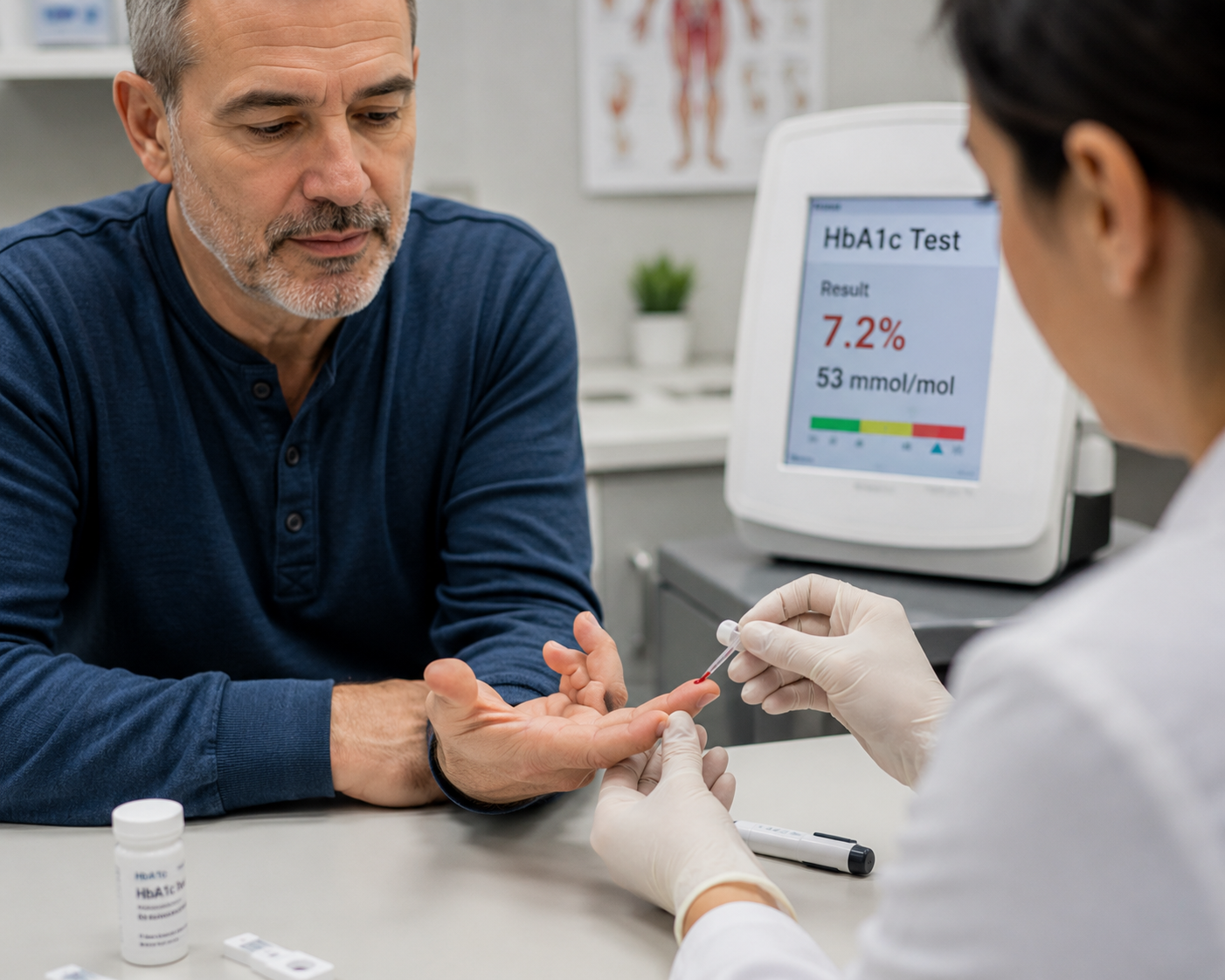
One of the most useful markers for monitoring diabetes management is HbA1c.
HbA1c reflects the average exposure of red blood cells to glucose over approximately the previous 8–12 weeks.
Numerous systematic reviews published in JAMA have demonstrated that structured exercise programmes significantly reduce HbA1c in adults with Type 2 Diabetes.
Importantly:
Aerobic exercise improves HbA1c
Resistance training improves HbA1c
Combining both often produces the greatest improvements
Programmes exceeding 150 minutes of exercise each week generally achieve larger reductions
This means exercise isn't simply lowering blood sugar immediately after a workout.
It produces measurable improvements in long-term glucose regulation.
Why Strength Training Deserves More Attention
For years diabetes management focused heavily on walking and cardiovascular exercise.
While aerobic exercise remains extremely beneficial, modern research increasingly recognises resistance training as equally important.
Skeletal muscle is the largest site of glucose disposal within the human body.
Simply put...
The more healthy muscle you have, the greater your capacity to remove glucose from your bloodstream.
Resistance training increases:
Muscle mass
Muscle quality
Muscular strength
Insulin sensitivity
Glucose uptake
Functional independence
A large systematic review published through PubMed found resistance training alone significantly reduced HbA1c in adults with Type 2 Diabetes.
Interestingly, participants who gained the greatest improvements in muscular strength also tended to demonstrate the greatest improvements in blood glucose control.
This highlights an important principle.
The objective isn't simply "doing exercise."
It's progressively becoming stronger.
As we age, we naturally lose muscle mass—a process known as sarcopenia. Since muscle plays such an important role in glucose disposal, preserving strength becomes increasingly valuable for maintaining metabolic health, independence and quality of life.
Start Strength Training with My Free Evidence-Based Programmes

Understanding the science is important—but applying it consistently is what delivers results.
If you're looking for a safe, structured starting point, I've created a collection of free evidence-based strength programmes delivered through my coaching app.
You'll receive free access to:
Evidence-based strength programmes
Progressive workout plans
Exercise tracking
Weight and rep logging
Nutrition logging
Lifestyle and body composition check-ins
Personal best tracking
Coach support
Whether you're completely new to resistance training or returning after time away, these programmes are designed to help you build strength progressively using the same evidence-based principles discussed throughout this article.
Click the Image to get Started!
Combining Strength Training and Cardiovascular Exercise
One of the landmark randomised controlled trials published in JAMA compared:
Aerobic exercise
Resistance training
Combined training
Control group
The researchers demonstrated that participants performing both aerobic and resistance exercise experienced the greatest improvements in HbA1c.
Rather than asking:"Should I lift weights or do cardio?"
The evidence increasingly suggests the answer is:Both.
Cardiovascular exercise improves:
Cardiorespiratory fitness
Blood pressure
Energy expenditure
Endothelial function
Cardiovascular health
Resistance training improves:
Muscle mass
Strength
Bone density
Functional capacity
Glucose disposal
Together they provide complementary benefits.
Exercise Isn't Just About Weight Loss

One of the biggest misconceptions surrounding diabetes is that exercise only matters if someone loses weight.
This simply isn't true.
Exercise improves:
Insulin sensitivity
Blood glucose regulation
Blood pressure
Cardiovascular fitness
Muscle strength
Mobility
Mental wellbeing...
even if body weight changes very little.
While fat loss may further improve insulin resistance in many individuals, it isn't the only reason exercise works.
Looking solely at the scales significantly underestimates its metabolic benefits.
Preventing Type 2 Diabetes
Exercise isn't only valuable once diabetes develops.
The landmark Diabetes Prevention Program, published in the New England Journal of Medicine, demonstrated that intensive lifestyle intervention reduced progression to Type 2 Diabetes by approximately 58% among high-risk individuals.
Similarly, the Finnish Diabetes Prevention Study demonstrated substantial reductions in diabetes incidence through structured lifestyle modification.
This reinforces a simple message:
Exercise is one of the most powerful tools available not only for managing diabetes—but also for preventing it.
Cardiovascular Health Matters
People living with diabetes have a significantly increased risk of cardiovascular disease.
For this reason, exercise should never be viewed solely through the lens of blood glucose.
Regular physical activity improves numerous cardiovascular risk factors including:
Blood pressure
Fitness
Lipid profile
Body composition
Physical function
NICE guidance recommends regular physical activity as part of comprehensive diabetes management because of these broader health benefits.
Exercise therefore contributes to reducing overall cardiovascular risk—not simply lowering glucose.
Type 1 Diabetes Requires Individual Planning
People living with Type 1 Diabetes gain many of the same health benefits from exercise.
However, exercise management becomes more complex because insulin dosing, carbohydrate intake and glucose monitoring must be considered.
Depending on the type, duration and intensity of exercise, blood glucose may rise, remain stable or fall.
For this reason, the NHS and NICE recommend:
Monitoring glucose before exercise
Monitoring during prolonged exercise
Monitoring after exercise
Adjusting carbohydrate intake where appropriate
Individualising insulin management
No two people respond identically.This is why exercise prescription should always be personalised.
Building a Sustainable Exercise Programme
There is no perfect diabetes workout.
Instead, programmes should reflect:
Current fitness
Medical history
Diabetes type
Medication
Existing complications
Personal preferences
Previous exercise experience
For most adults with uncomplicated Type 2 Diabetes, an evidence-based programme will gradually work towards:
150 minutes of moderate aerobic activity weekly
Resistance training at least twice weekly
Reduced sedentary time
Progressive overload
Consistent long-term adherence
Remember:
The best programme is the one you can sustain.

Exercise Is Only One Piece of Diabetes Management
Exercise is incredibly powerful.
But it works best alongside:
Evidence-based nutrition
Appropriate medication where required
Blood glucose monitoring
Adequate sleep
Stress management
Smoking cessation
Cardiovascular risk reduction
Successful diabetes management rarely depends upon one intervention alone.Instead, it results from multiple evidence-based lifestyle and medical strategies working together over many years.
Ready to Get Started?
Reading the science is valuable.
Applying it consistently is where lasting change happens.
If you'd like free access to the same evidence-based principles discussed throughout this article, I've created a completely free coaching app designed to help you start safely and progress confidently.
Inside you'll find:
Evidence-based strength programmes
Progressive training plans
Workout tracking
Nutrition logging
Body composition monitoring
Lifestyle check-ins
Rep and weight logging
Personal best tracking
Coach support
Whether your goal is improving blood glucose control, increasing strength, reducing body fat or simply becoming healthier, these resources are designed to give you a practical starting point.
Start completely free today
Conclusion
Exercise is one of the most powerful non-pharmacological interventions available for improving diabetes outcomes.
It enhances insulin sensitivity, lowers HbA1c, improves cardiovascular health, preserves muscle mass and supports long-term independence and quality of life.
The strongest evidence suggests that combining resistance training with aerobic exercise provides the greatest overall benefits, particularly when programmes are individualised and progressed gradually.
Rather than viewing exercise as a short-term solution for weight loss, it should be recognised as a lifelong component of diabetes care—working alongside nutrition, medication and regular clinical monitoring to improve health outcomes.
Small, consistent improvements performed over months and years are far more powerful than short bursts of unsustainable effort.
References
Church TS, Blair SN, Cocreham S, et al. JAMA. 2010;304(20):2253–2262.
Umpierre D, Ribeiro PAB, Kramer CK, et al. JAMA. 2011;305(17):1790–1799.
Jansson AK, Chan LX, Lubans DR, et al. Resistance training and HbA1c in adults with Type 2 Diabetes. 2022.
Colberg SR, Sigal RJ, Yardley JE, et al. Physical Activity/Exercise and Diabetes Position Statement. Diabetes Care. 2016.
Riddell MC, Gallen IW, Smart CE, et al. Exercise management in Type 1 Diabetes. 2017.
Diabetes Prevention Program Research Group. NEJM. 2002.
Tuomilehto J, et al. NEJM. 2001.
Look AHEAD Research Group. NEJM. 2013.
NICE Guideline NG28 – Type 2 Diabetes in Adults: Management.
NICE Guideline NG17 – Type 1 Diabetes in Adults: Diagnosis and Management.
NHS – Type 1 Diabetes.
NHS – Type 2 Diabetes.
Medical Disclaimer
This article is intended for educational purposes only and should not be considered medical advice. Exercise programmes should be individualised, particularly for people using insulin, glucose-lowering medications or those with diabetes-related complications. Always consult your GP, diabetes specialist nurse or healthcare team before making significant changes to your exercise routine or medication.